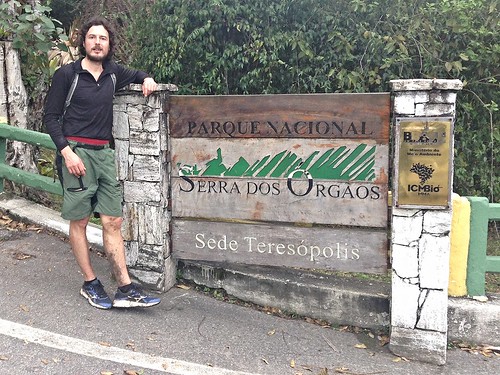
Who needs a guide? Getting lost is part of any hiking adventure!
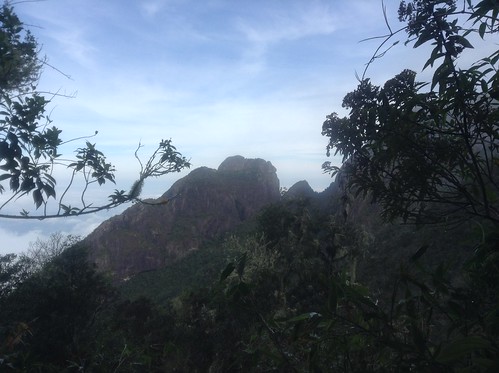
One of Brazil’s most beautiful and well-traveled hiking trails is said to be the Travessia Petrópolis-Teresópolis through Parque Nacional da Serra dos Órgãos in the state of Rio de Janeiro. It’s about 30 kilometers (20 miles) and includes some 1,300 meters (4,300 feet) of elevation gain, with a peak elevation of 2,263 meters (7,425 feet).
It’s recommended to do the hike in 2-3 days, with a group, and a guide, in weather that is clear and sunny.
I did the traverse in one day, without a guide, alone, and in cloudy, windy, rainy weather.
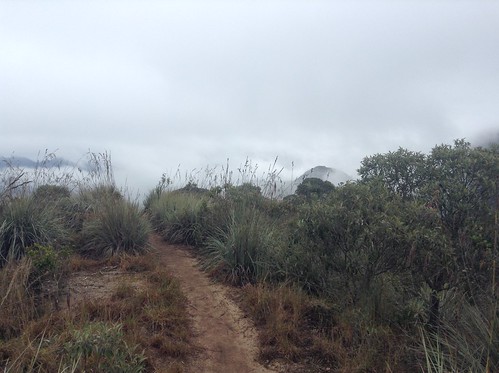
Some lessons learned and recommendations:
1) How long does it take? Depends.
I began trekking at 8:30 am and finished at 4:30 pm, so it took me about eight hours total, which included about two hours for: two 15-minute breaks, and getting lost for about 90 minutes.
A ranger told me the travessia’s speed record is 3 hours and 40 minutes. So for a fast hiker, completing it during daylight in 7 to 9 hours is very doable.
2) Can anyone do the travessia in one day? No.
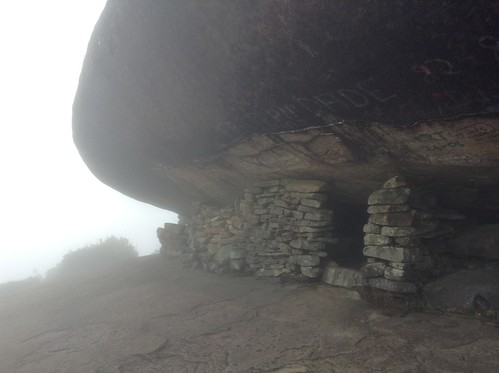
If you like to hike fast and travel light, then yes you can certainly do the travessia in one day. I ran parts of the first 8 km section and much of the final 10 km section. I didn’t run at all during the middle 12 km section, because the terrain was more tricky and the trail was less visible.
If you like to linger on the trail, to stop semi-frequently, to enjoy rest stops for meals, then take two days for this trek. I’d love to see the sunset or sunrise from up there.
3) Can you access the travessia using only public transport? Yes.
But of course, public transport takes longer.
I left my hostel in Petrópolis at 6:45 am. It took an hour by public bus (3.40 reais, or $1) to reach the trailhead in Bonfim. This is where you register with park officials and get a free basic map, and also get assessed by the rangers as to your seeming ability to complete the trek.
Exiting the park 40 km later in Teresópolis, I caught a public bus to the city’s main bus terminal. I just-missed the 5 pm bus back to Petrópolis (costs 20 reais, or $6.33), so I had to wait two hours for the 7 pm bus — which is the last bus of the day, beware.
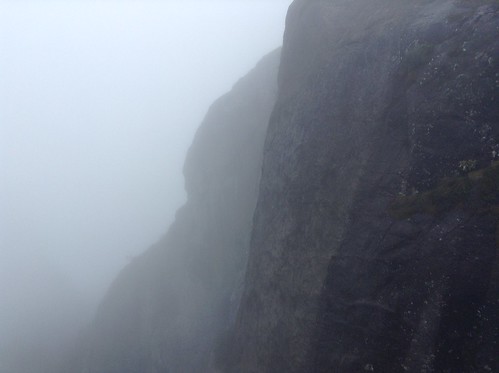
4) Do you need to hire a guide? No.
The trail is well-enough marked, and well-enough traveled, to do without a guide.
My hostel in Petrópolis quoted the cost of a guide at 275 reais ($90) for the first day, plus 25 reais ($10) for each additional day that you’re on the trail. That’s not cheap; it’s also not super expensive if you’re splitting it among several people.
But I think that discovering a trail on your own and asking for directions along the way is part of the adventure of hiking and the communion of the trail. It increases your interaction with everything, it forces you to be more aware of your surroundings.
5) Do you need a GPS, cell phone, or super-detailed map? No.
At the park entrance, one of the rangers asked me, “Do you have a GPS? A cell phone? Have you ever hiked the tail before?” I answered “no, no, no.”
The ranger shook his head and warned that what I was about to do was “muito peligrosa.” I didn’t ignore him, but I took him with a grain of salt. I knew from research that after 8 km I would reach the first ranger station, called Abrigo Açu, at which point I could reassess and turn back if I wasn’t making good time.
6) Will you be alone on the trail? No.
Even if you go alone, you won’t be alone. I hiked on a cloudy weekday, and still I encountered more than a dozen people on the trail and enjoyed coffee with the rangers at both mountain shelters (at the 8 km mark and the 20 km mark). I even met a 70-year-old Brazilian who was doing the travessia alone.
The first 8 km to Abrigo Açu is relatively wide and well-marked. When I arrived, the head ranger welcomed me onto the shelter’s porch for a cafezinho and told me to slow down because he thought I was hiking too fast to enjoy the trail.
7) Is there a risk of getting lost? Yes.
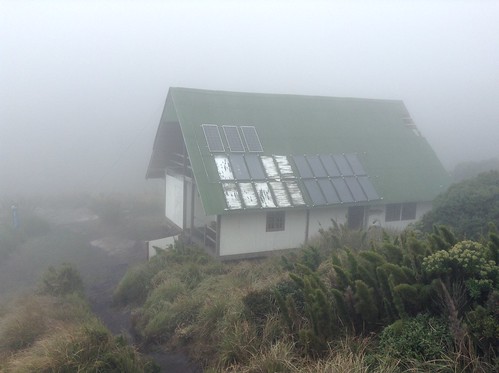
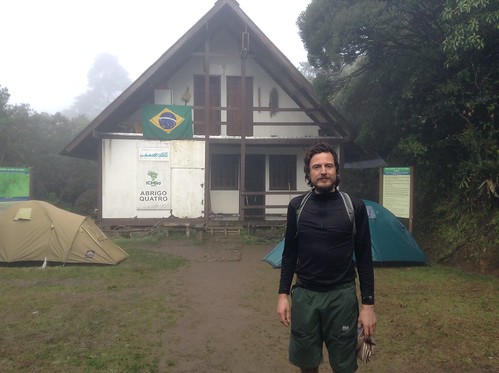
But if you ever think you’re lost, simply backtrack. The 12 km between Abrigo Açu and the second shelter, called Abrigo Quatro, is where I got lost for 90 minutes.
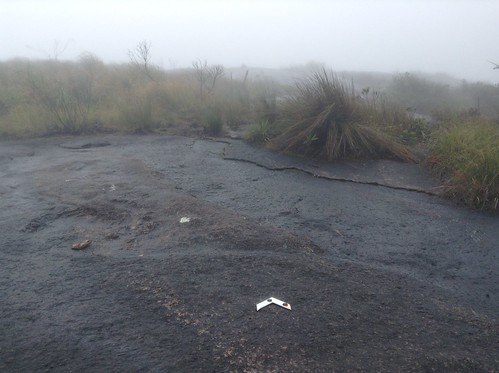
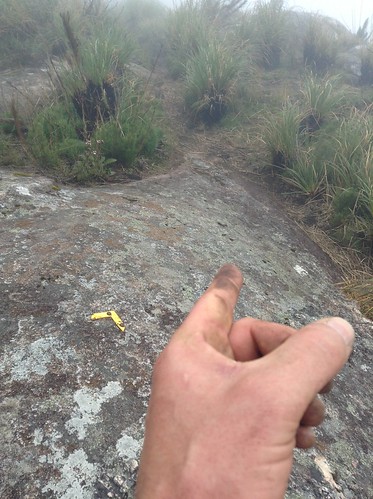
Looking back, my mistake was in pushing forward through what was obviously not the main trail, and then attempting to bushwhack through tall grass and cactus thinking that I’d find the main trail, rather than immediately doubling-back and finding the yellow arrows that point the way forward along the entire travessia, which I eventually did.
I was hiking alone on a very cloudy day with minimal visibility. You won’t get lost if you’re cautious, if it’s clear weather, and if you have more than two eyes keeping watch for the trail markers.
8) Is the trail dangerous? Not really.
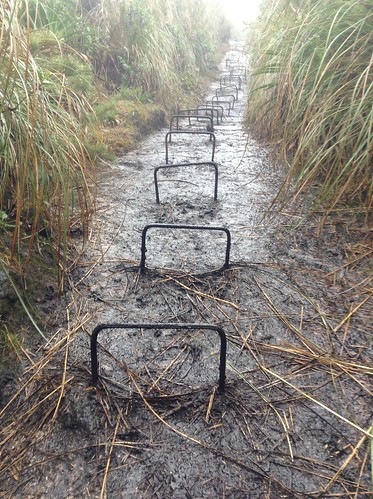
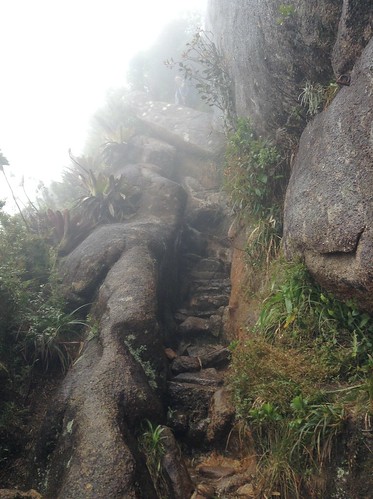
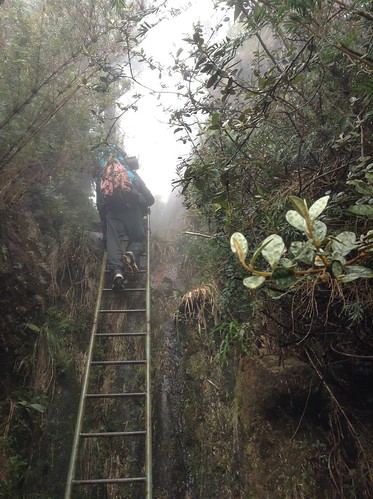
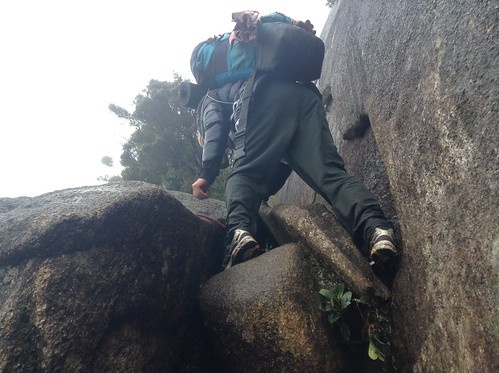
The 12-kilometer section between the two shelters crosses some steepish sections of rock. In places, bolts had been set in the rocks so as to belay climbers down (or up) with ropes, which is prudent for an inexperienced group, or even just those who want to play it cautious. But a careful and sure-footed hiker can navigate it all without ropes or special equipment of any kind.
9) Do you need special gear? No.
I did it in shorts, a long-sleeve shirt, and running shoes. I carried a pack of cookies, a Snickers, and 32-ounce bottle of water; there is no need to haul more water than that, because the trail has many refill points.
I wish I had brought bringing flip-flops for when I finished the trail. I didn’t, and so I was wearing wet shoes and socks for another five hours after I’d finished he hike.
10) Is Petrópolis-Teresópolis as cold as Brazilians say it is? Yes.
While a Brazilian’s description of what’s cold weather is usually exaggerated, Petrópolis and Teresópolis are definitely chilly towns during the winter months of July-August. As I typed this post at the hostel back in Petrópolis, I was wearing pants, flannel shirt, heavy sweater, and wool hat — and I was still shivering! I can only imagine it’s much chillier at night along the travessia for overnight campers.